The Sleep Company
Jul 2026 – Oct 2026Product Intern, GrowthInternship
Growth intern on pre-launch product work for a D2C sleep brand. Internal systems and plans stay internal.
Product Manager & Builder — turning ambiguous domain problems into product decisions, specs, and shipped systems.
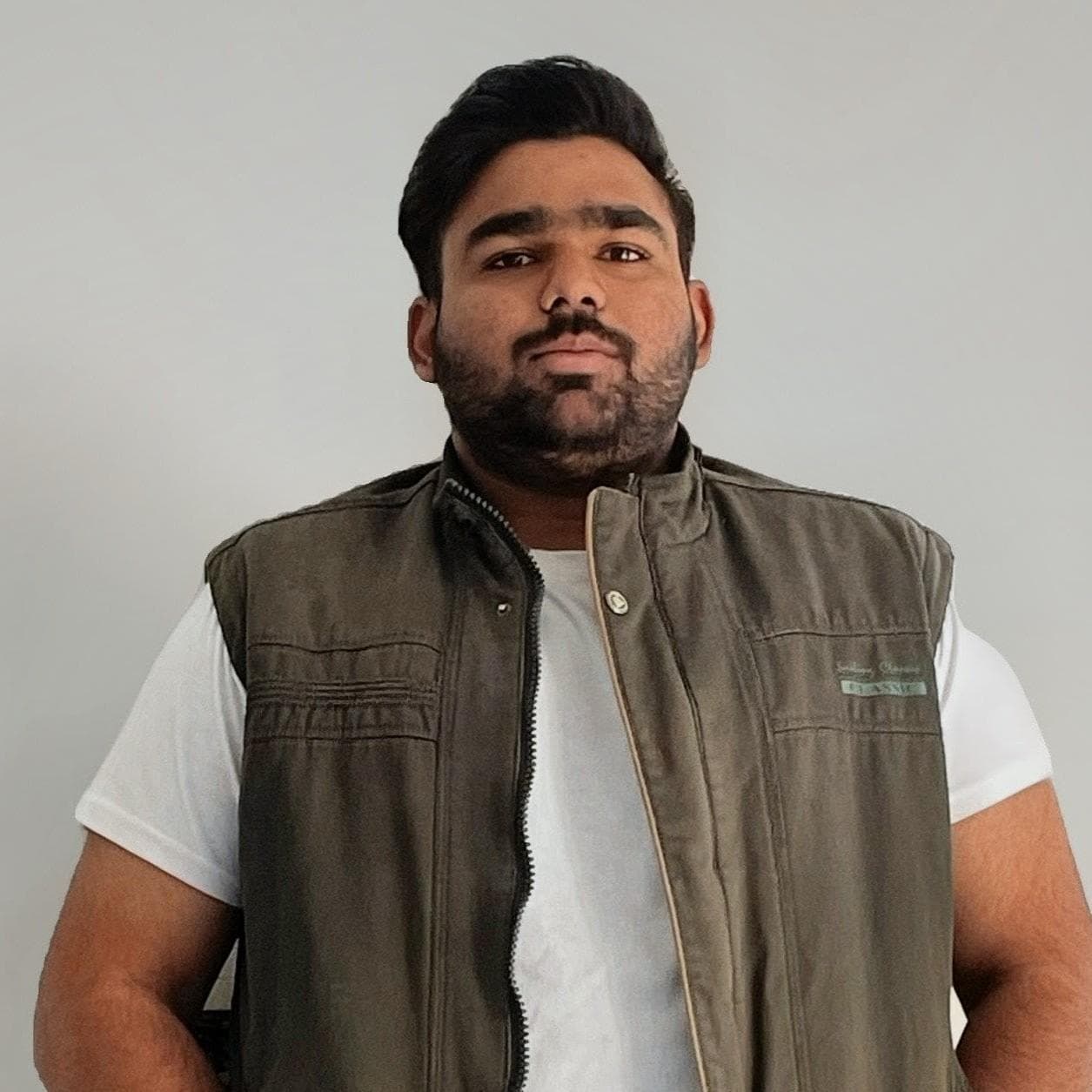
I pick up a domain by building something in it. That has been the pattern since my first internship. I get close enough to the problem to write the PRD, close enough to the data to build the eval set, and close enough to the code to build a first version when that is the fastest way to learn. Where someone built it with me, I say so. Then whatever breaks tells me what I got wrong in the spec.
At Omniful.ai, “find better prospects” turned into a scoring model built on firmographic and behavioural signals. Qualified prospects went from about 10 a day to over 200, and the work supported 10 client acquisitions (both self-reported; I have no artefact to share). At Read Riches I ran the founder's office side of content-led growth. I managed a 4-person research and content team and ran publishing experiments that contributed to a 4x retention improvement (self-reported). Different industries, same job: find the loop, instrument it, then turn the handle.
At Wipro TOPS I scoped an internal AI-powered enterprise workflow platform, along with workflows for an internal crew mobile micro-app and an internal records platform for non-crew staff, across 12+ aviation scenarios (self-reported). Most of that job was finding edge cases early enough that they became sprint tickets instead of incidents. It is also where I killed 37 low-signal dashboard charts and kept the 3 that actually drove a decision (self-reported). Most recently I was a product intern on the growth team at The Sleep Company (Jul–Oct 2026), on pre-launch work; the internal detail stays internal.
Outside of work there is Aarchid, which I co-built with Dilpreet Grover. It diagnoses plant health from a photo. I wrote the PRD and built the eval harness, and we shipped V1 together. Self-reported: the team ran an offline eval on a golden set (about 200 samples, as reported by the team); the result is withheld until the eval artefact or the co-builder's confirmation is available. No offline score could say whether someone would trust a diagnosis enough to act on it. Holding both of those at once is the part of the job I actually like.
What I am working on this month is on the now page. The books that shaped how I think are on the bookshelf, and the tools I use are listed on uses.
Product Intern, GrowthInternship
Growth intern on pre-launch product work for a D2C sleep brand. Internal systems and plans stay internal.
AI Product Intern, Wipro TOPSInternship
Scoped an internal AI-powered enterprise workflow platform, plus workflows for an internal crew mobile micro-app and an internal records platform for non-crew staff, across 12+ aviation scenarios (self-reported); surfaced edge cases early and moved specs into active sprint development.
Founder's OfficeConsulting
Ran content-led growth experiments, managed a 4-person research and content team, and contributed to a 4x retention improvement (self-reported) through better publishing cadence and feedback loops.
Business Analyst InternInternship
Defined prospect scoring using firmographic and behavioral signals, scaled qualified prospects from about 10 per day to 200+ per day, and supported 10 client acquisitions (self-reported).
I cut dashboards and features that do not change a decision, then align stakeholders around the few workflows that actually deserve priority.
An offline eval score says how often the model is right on cases I chose. It cannot say whether people will trust the answer enough to act on it. Both questions matter.
Ship the smallest version that can be wrong in a useful way, then let what breaks rewrite the spec. Perfection is the enemy of learning.
3rd Place — Led problem discovery, market sizing, GTM and the pitch for a job-matching platform.
Top 5.
Top 10.
Last synced: